Representatives of the Institute for Social Research Present to President Milanović the Results of a Research Project on the Effects of the Pandemic and the Earthquake on the Education System
The President of the Republic Zoran Milanović met with Dr. Boris Jokić and Dr. Zrinka Ristić Dedić who presented to him the results of Research-Developmental Project the Institute for Social Research entitled: “National Monitoring of the Effects of the COVID-19 Disease Pandemic and the 2020 Earthquake on the Organization of Educational Processes and the Well-Being of Pupils and Educational Workers in the Republic of Croatia”.
The representatives of the Institute underlined that the school environment is crucial for the mental health of children because it provides structure, a feeling of security and meaning to their activities, develops communication skills, especially at an age when young people are oriented to their social lives and are building friendships. In this regard, they said that the research results unequivocally indicate that remote teaching has adverse effects on being involved in physical activities in elementary schools, and particularly on the mental health of secondary school students, and that the repercussions won’t be felt until the future.
Teaching has to take place inside the classrooms with responsible behaviour of all those taking part in the process, Dr. Jokić and Dr. Ristić Dedić underlined during the presentation of their results. They indicated that the research has determined that in-class teaching is important in terms of the value of education since the pupils have stressed that the pandemic has impacted their working habits, motivation for learning and skills in school subjects. Moreover, the pupils have noted that it is easier to learn in the classrooms, the classes are more interesting and easier to understand, and remote teaching has resulted in significant losses of acquired knowledge and skills.
Since the research of the Institute for Social Research included teachers, it was noted that in-class teaching is important for teachers as well because their work is considerably more difficult due to their talking for hours while wearing masks, increased stress and a more demanding way of working. Research has shown that the earthquake in Sisak-Moslavina County has left even more serious consequences on pupils and teachers than the pandemic.
“It is imperative to address the psychosocial state of pupils by drafting a system of policies and measures, increase psychosocial support to children, show understanding for increasing demands of work of all school employees during the pandemic and do everything to ensure that schools remain open for learning and growing up”, the director of the Institute for Social Research Dr. Jokić said.
The research, which was conducted in the period of May to June 2021 in 161 secondary and elementary schools and in 10 schools affected by the earthquake in Sisak-Moslavina County, covering more than 27,000 pupils from 10 to 18 years of age, 417 expert assistants and 4,796 teachers, was funded by the Ministry of Science and Education, and will continue thanks to the funding by the Croatian Science Foundation.
Alongside President Milanović at the meeting with representatives of the Institute for Social Research was the Adviser to the President of the Republic for Education Jadranka Žarković.
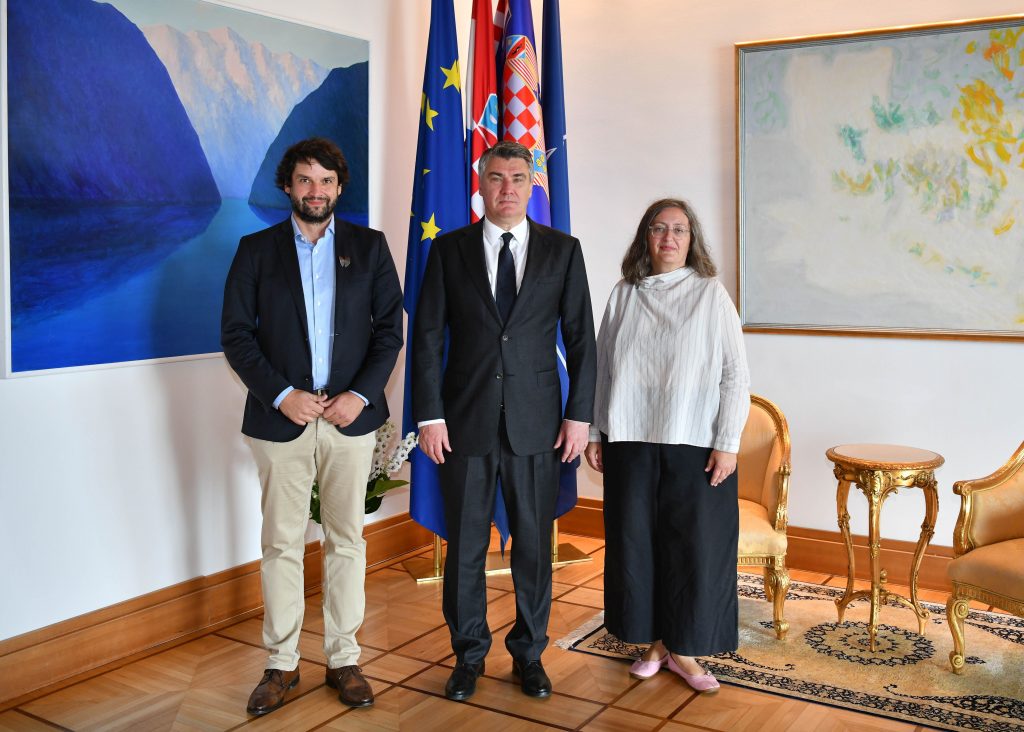
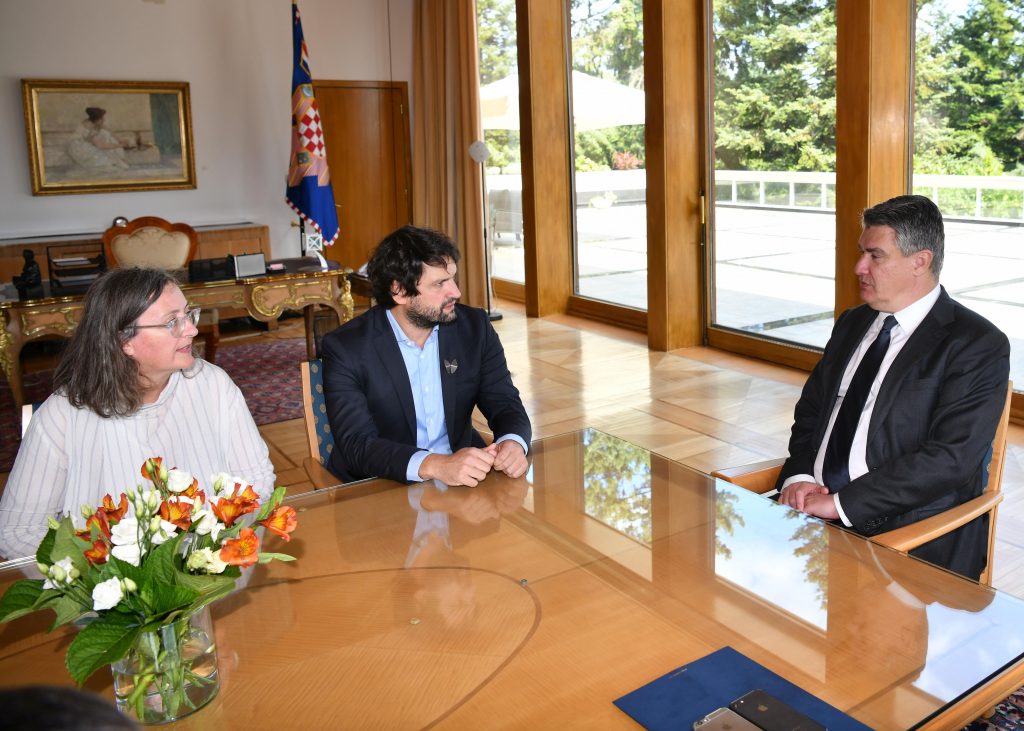
PHOTO: Office of the President of the Republic of Croatia / Dario Andrišek