President Milanović at Opening of Exhibition “Prah ili Mirabile Visu” by Ljubo Ivančić
The President of the Republic Zoran Milanović and his spouse, Sanja Musić Milanović, attended the opening of an exhibition of previously unseen works by Ljubo Ivančić, one of the most important Croatian painters of the second half of the twentieth century. The exhibition, “Prah ili mirabile visu” (Dust or Mirabile Visu), opened at Zagreb’s D.S. Gallery. The Latin phrase mirabile visu means “wonderful to behold.” Art historian Vanja Babić and Damir Sokić, owner of the D.S. Gallery, spoke about Ivančić’s work at the opening.
Babić noted that Ivančić painted landscapes and still-life paintings with equal mastery, but argued that the most distinctive and powerful element of his oeuvre is the human figure. “Ivančić’s painting raises questions about human existence and points toward existentialism,” he said, adding that Ivančić was “a painter of existence,” an artist in whose work “human drama, and at times suffering, unfolds in peace and silence.” Babić also emphasized the significance of the exhibition venue at 35 Ulica grada Vukovara. The building was designed by architect Drago Galić as part of a broader urban planning vision aimed at developing Zagreb into a modern metropolis and shifting the city’s cultural life south of the railway line.
Damir Sokić described Ivančić’s paintings as works imbued with “an archaeological stillness.” In the exhibition catalogue, he wrote: “We will bring these paintings out of the darkness and allow them to speak about what must never be allowed to slip quietly beneath the threshold of memory. We will open the door, if only slightly, to one of the parallel worlds that we believe is better than the one offered to us — this so-called real world.”
Ljubo Ivančić was born in Split in 1925 and died in Zagreb in 2003. He graduated from the Academy of Fine Arts in Zagreb in 1949. He later taught at the Academy, led its Master Workshop, and mentored a number of prominent artists. His work is characterized by a dark palette, formal simplification, and a powerful existential atmosphere, qualities that have linked him to the most significant currents of Croatian post-war modernism. In 1991, he became a full member of the Croatian Academy of Sciences and Arts, and in 1983 he received the Vladimir Nazor Lifetime Achievement Award.
Also attending the exhibition opening were Orsat Miljenić, Head of the Office of the President of the Republic, and Zdravko Zima, Special Adviser to the President of the Republic for Culture. (HINA)
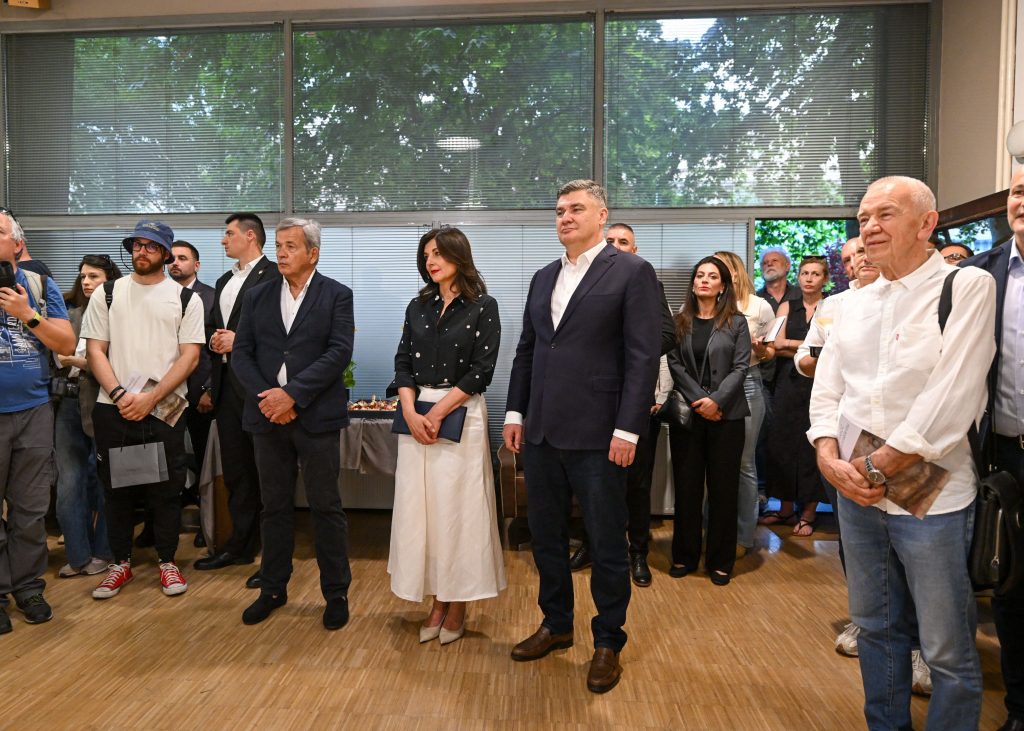
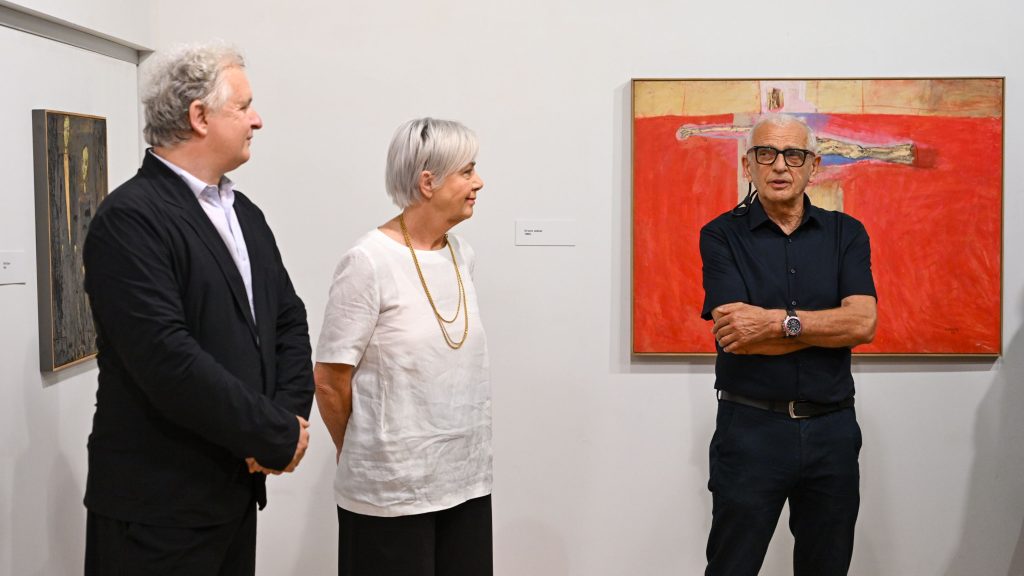
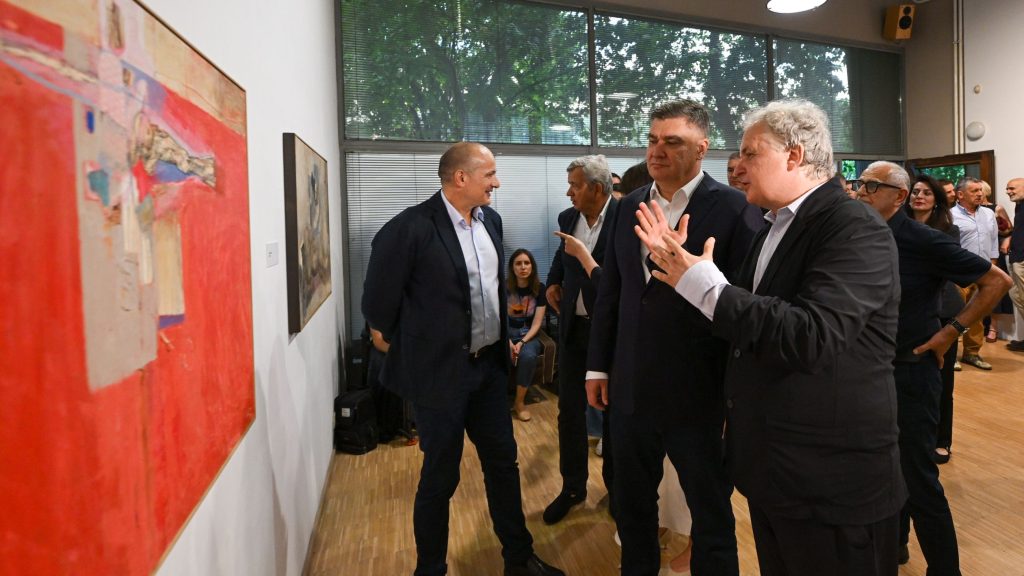
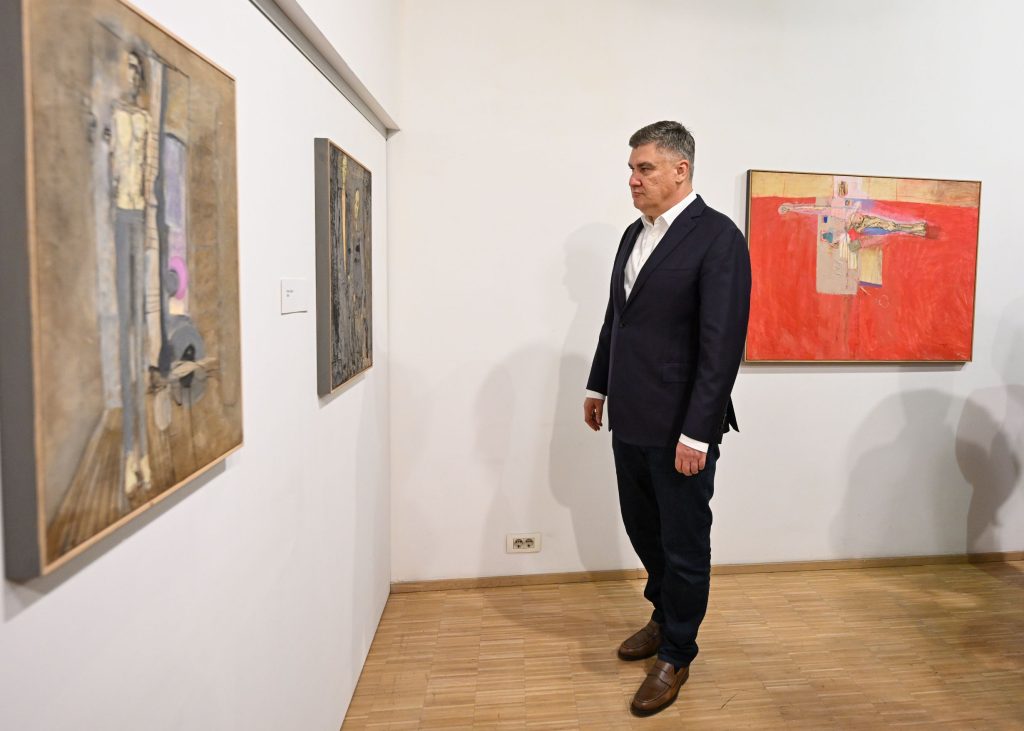
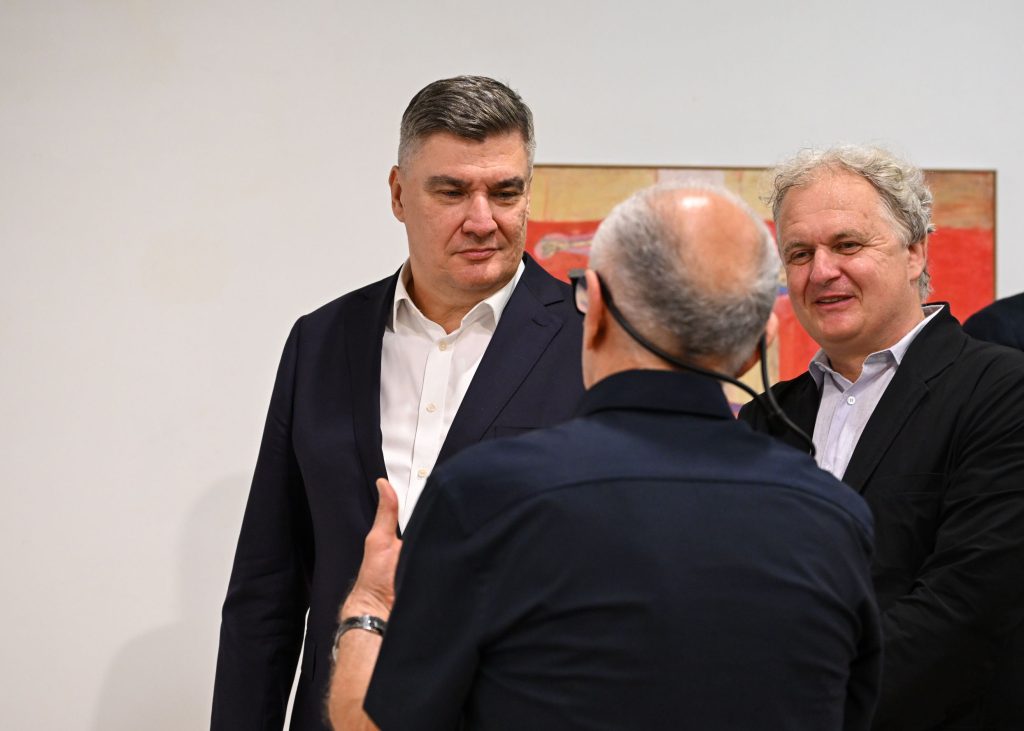
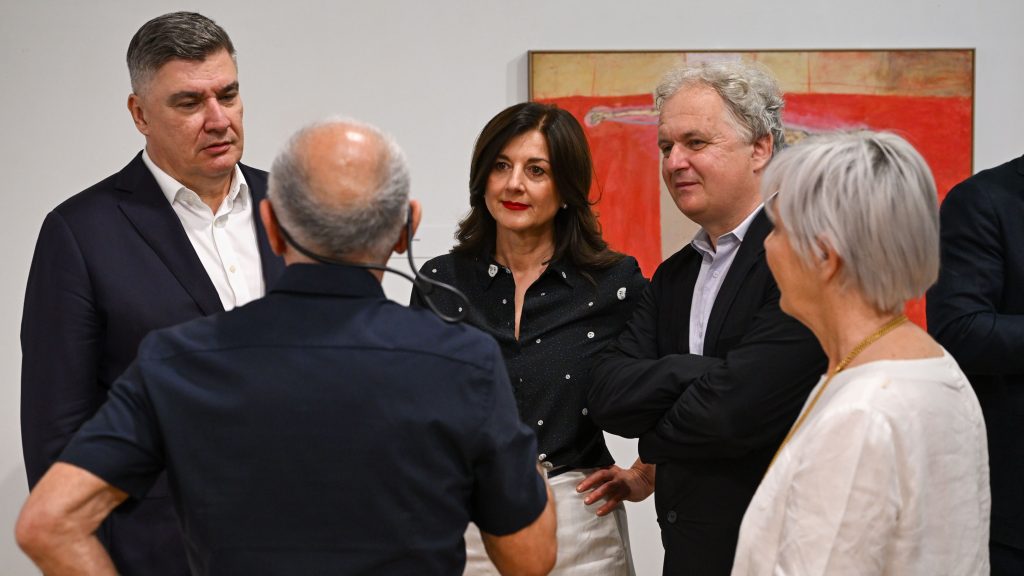
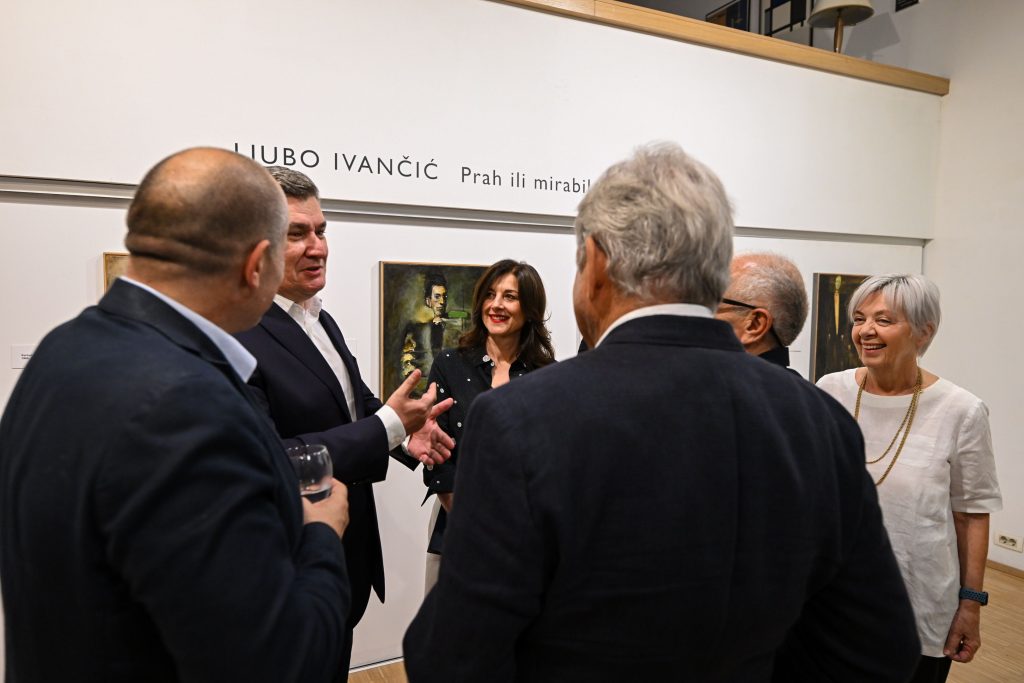
PHOTO: Office of the President of the Republic of Croatia / Marko Beljan