President Milanović after NATO Summit: Serbia is behaving strangely; I had to speak about it because NATO needs to know
“Croatia’s position is to be loyal and fair to its NATO allies, not to do anything behind their backs, which we are not doing, while keeping a close eye on developments and safeguarding our own interests. That means we are not part of the Coalition of the Willing, and I repeated that to everyone here. Croatia has paid other people’s bills far too often throughout history, and at times has made poor calculations for itself as well. I hope we have now entered a period in which we will make the most of our greatest asset, which is our position. Croatia’s position is a good one, and we should not be where we do not need to be,” the President of the Republic Zoran Milanović said today after the NATO Summit in Ankara.
Speaking to the media after the meeting, President Milanović said that, in this setting, President Donald Trump had been the most candid, saying that he “comes here as a fully determined arms dealer and, in that sense, represents American interests.” “He speaks about Putin and Xi with full respect, just as they speak about him. Other leaders use different rhetoric,” he said.
He noted that the Coalition of the Willing had been mentioned by President Emmanuel Macron and Prime Minister Keir Starmer, “the people who came up with it, but without any form or clarity.” “That is why we cannot be part of it. The idea of a Western presence in Ukraine following some future peace agreement is very dangerous, poorly developed and uncertain,” he said.
President Milanović also confirmed to reporters that he had addressed the situation in Croatia’s neighbourhood during the meeting of NATO leaders. “I also mentioned Serbia’s recent military build-up and its purchases of various [weapons] systems. Serbia is behaving strangely. I hope it will not acquire an aircraft carrier on wheels, since it has no sea. The question that must always be asked is: what do you need all this for? Why are you acquiring it? What is your threat assessment and how do you intend to use it?” President Milanović said, stressing that Croatia, as a state, would have to respond “by equipping ourselves with something similar.” “NATO needs to know this and it needs to be discussed. It is my duty to speak about it,” the President said.
“Ukraine has an army, and that is what saved it. It is brave and capable. We are talking about hundreds of thousands of young and not-so-young men who are fighting, many of whom were mobilised against their will, but that is how states used to function. None of the countries we know today function that way. No NATO member has a significant number of troops; they simply cannot, because those numbers do not exist. Russia, for the time being, does, and it has managed to assemble them without mobilisation, and that is the danger. They have one million people on the payroll. At some point, that will have to stop; a line will have to be drawn. I hope Ukraine can endure it,” the Croatian President said.
President Milanović went on to say that diplomacy had received little attention during the meeting. “We have to bear in mind that Russia has an enormous and very powerful nuclear arsenal, but I do not believe it would dare attack European territory,” he said. Commenting on tensions between Donald Trump and NATO allies, he added that he hoped NATO would endure, “but without the United States it makes no sense.”
“For the first time, I heard that whether it is five percent or two percent means nothing. The only thing that matters is the capabilities that money can buy, because prices are rising dramatically. Minister Anušić boasted that we are buying an aircraft. I insisted that this should be one of our priorities because we currently have nothing. They will provide the funding, but is that the best approach? I hope the General Staff is involved in this and that it is not somebody’s personal project. We should lease an Airbus, which the French could make available to us when we need it. We will also see how the upcoming engine maintenance cycle for the Rafales goes and whether our strategic partners will be able to meet our needs. That is very important,” President Milanović said. He added that he supports the plan to procure a military transport aircraft for the Croatian Armed Forces because “these are the kinds of capabilities that must be considered over the medium term.”
President Milanović reiterated that Croatia’s geopolitical position is favourable and “better than Estonia’s or Lithuania’s.” “My task as President is to derive the greatest possible benefit from that for our people, not to push myself forward and repeat like a parrot ten sentences that will appeal to Ursula von der Leyen. Politics also involves thinking and weighing difficult choices, including this unfortunate military parade, which is nothing more than a parade for one man who is leaving office. What would people in Croatia have said if I had approved it?” President Milanović said. He also revealed that he had not spoken with French President Emmanuel Macron because, “everything is clear: respect, but respect me too.”
Asked by reporters about the possibility of running in the parliamentary elections, President Milanović said: “That is impossible. The elections will be held no later than two years from now, well within my term of office. I will still have a year and a half left in my mandate. In 2024, the situation was very different because I was nearing the end of my term and intended to do something that was entirely lawful and constitutional. However, the organised criminal brotherhood prevented it – the so-called constitutional judges. I have no intention of repeating that. After that, I ran for President again. I asked the Croatian people to renew my mandate, and they did so quite convincingly. I therefore have no right to step down, regardless of what I think of Plenković and his brilliant government. That is my patriotic and professional duty. I must serve out my mandate.”
“I was here today. Nowhere does the Constitution explicitly state that Croatia must be represented at NATO meetings by the President, whereas it explicitly states that, in the European Council, the state is represented by the Government and the President of the Republic. I can certainly imagine the Prime Minister sitting here at this meeting. I came here to a well-prepared setting: you speak for three minutes, once a year, three minutes. Those are the rules we play by. This is all a form of political theatre, which is also part of international relations,” President Milanović concluded.
On the eve of the NATO Summit, President Milanović met with Bulgarian Prime Minister Rumen Radev to discuss the bilateral partnership in the fields of security and defence. During the meeting, they exchanged views on the security risks arising from the military operations in Ukraine and the Middle East, as well as the socio-economic consequences affecting European countries.
The previous evening, the President of the Republic Zoran Milanović attended a ceremonial dinner hosted by Turkish President Recep Tayyip Erdoğan for the heads of state and government of NATO member countries.
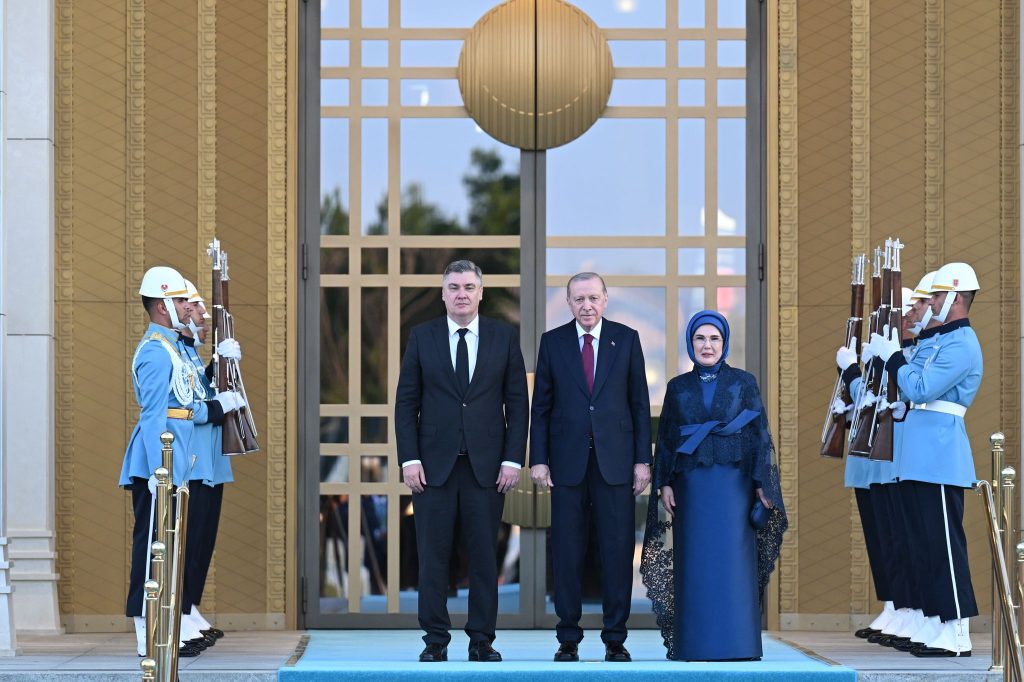
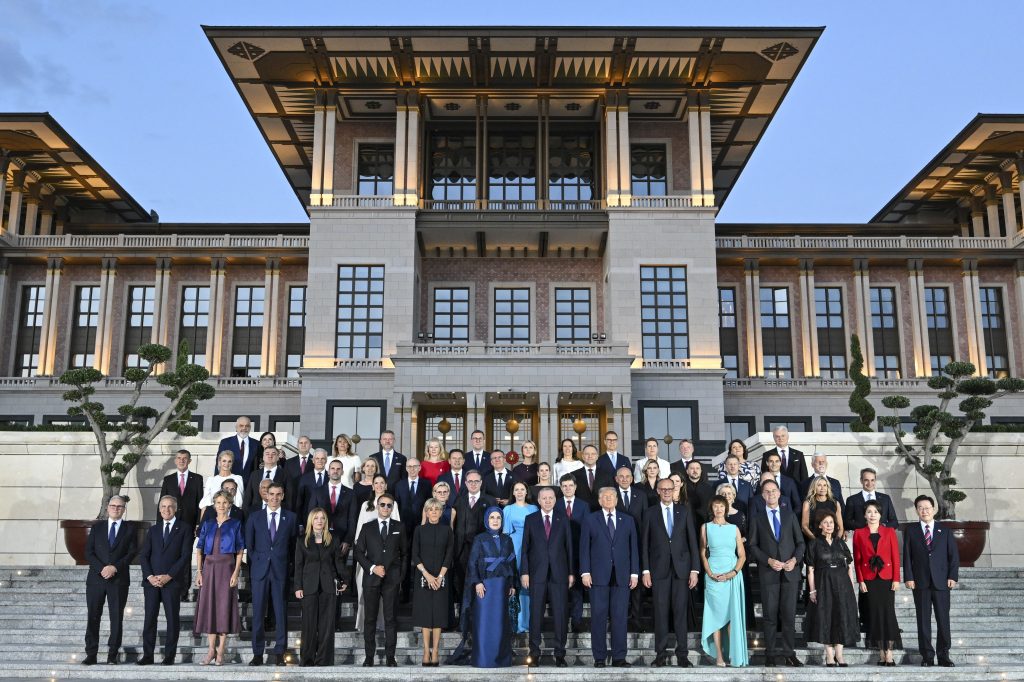
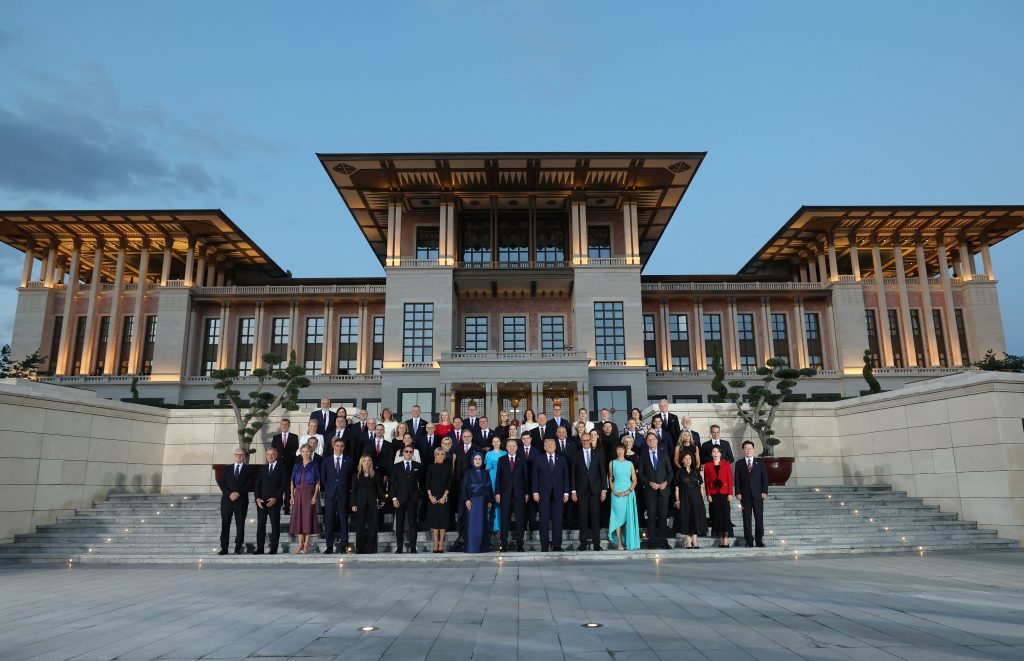
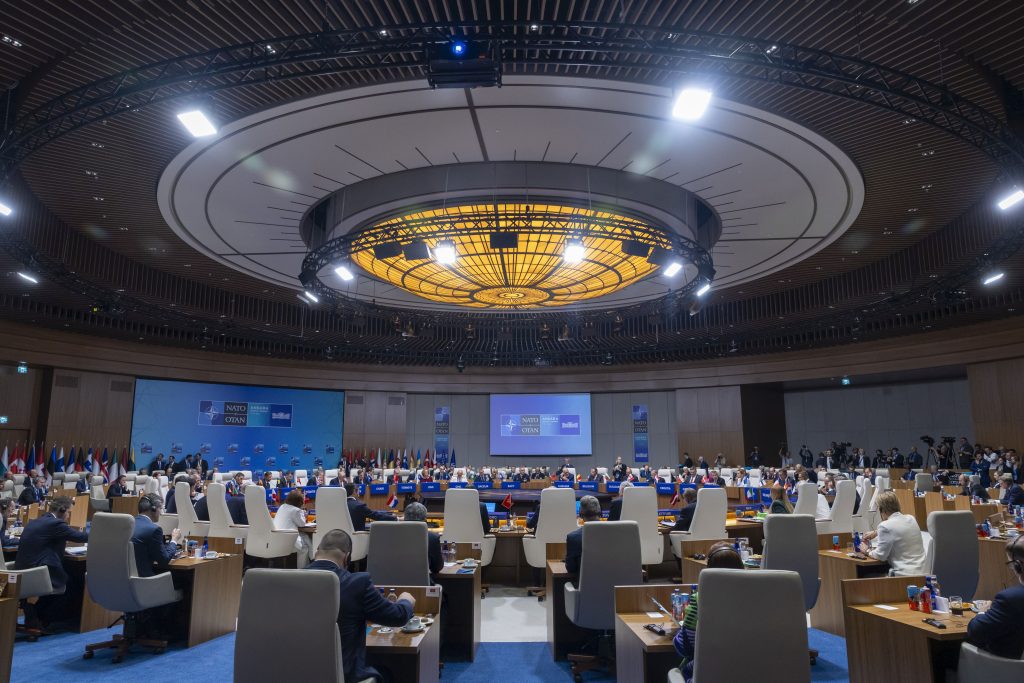
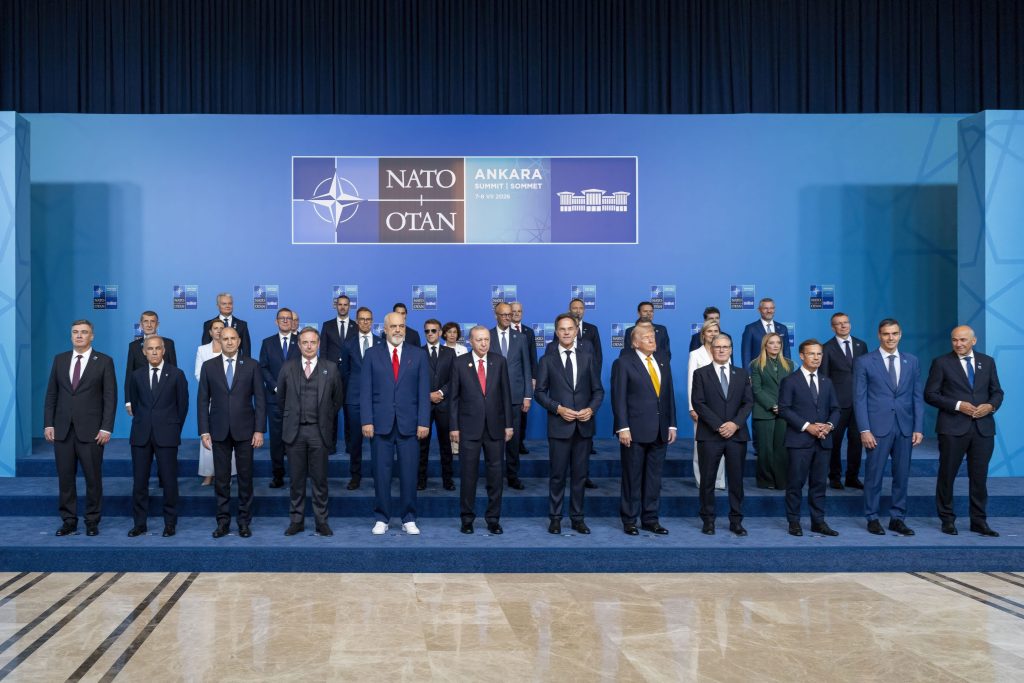
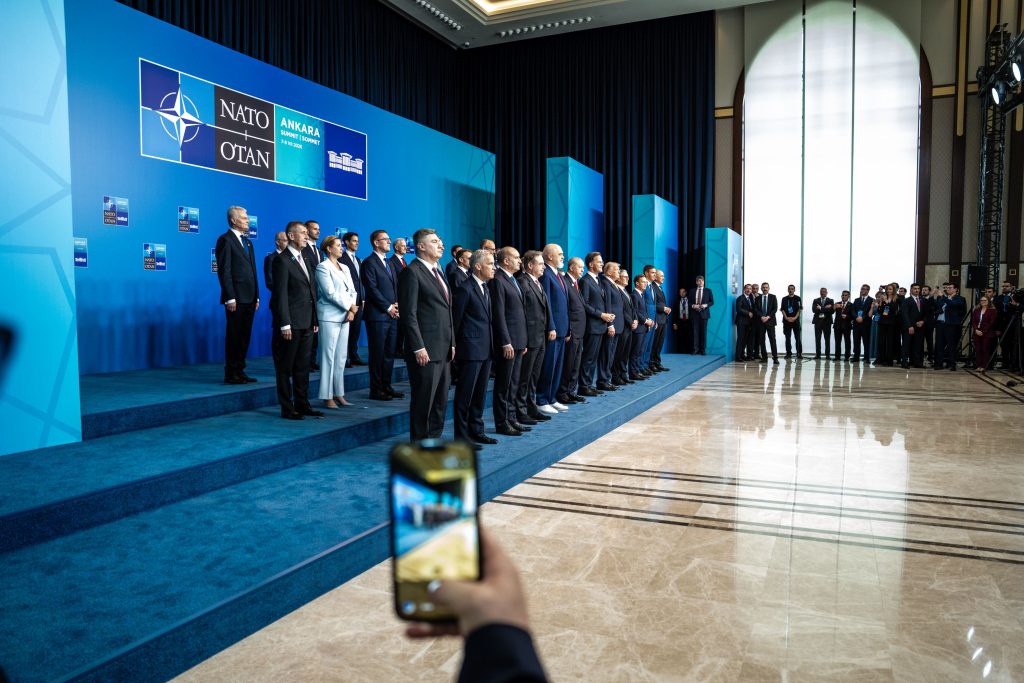
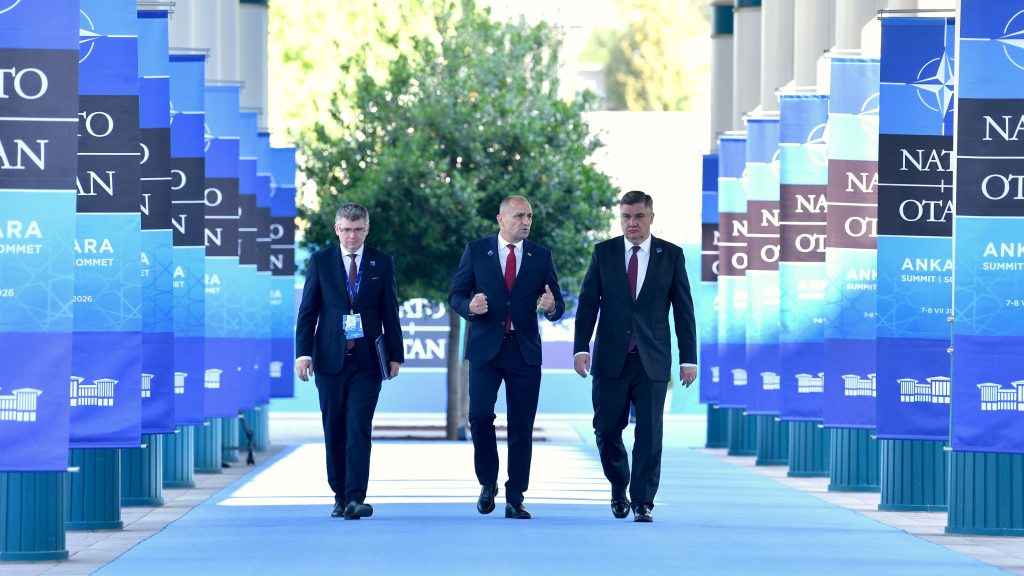
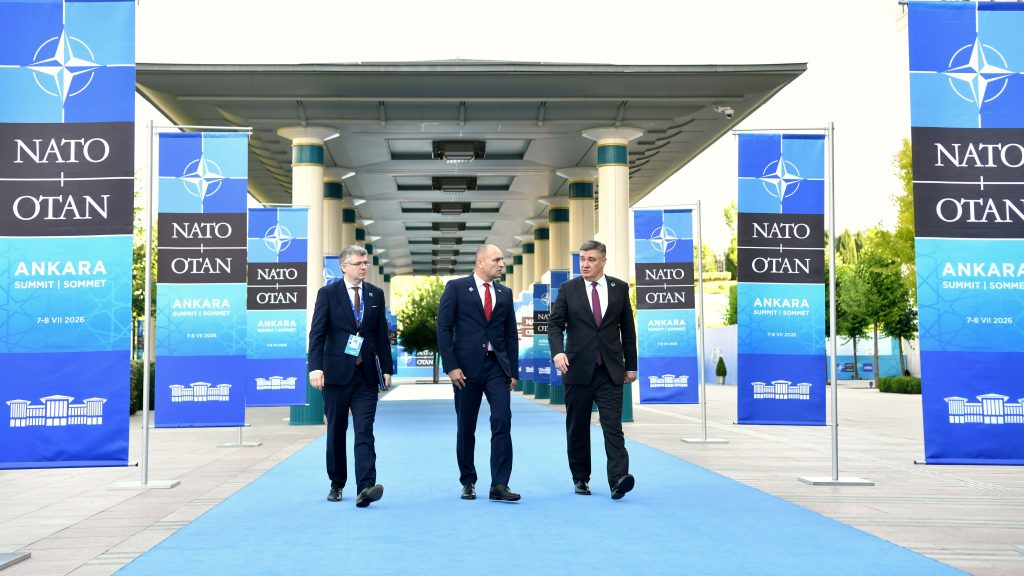
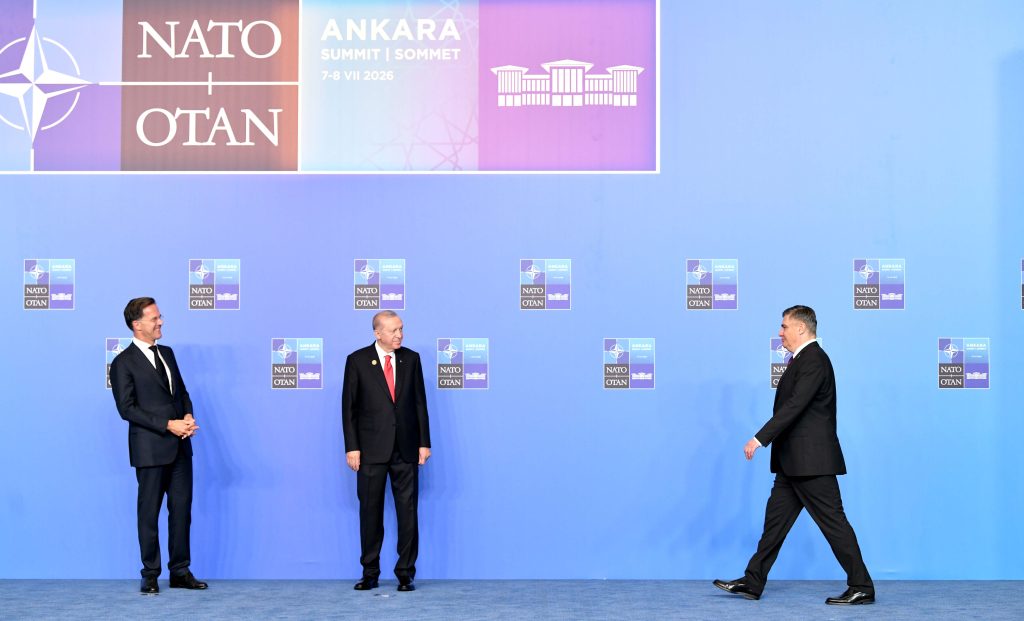
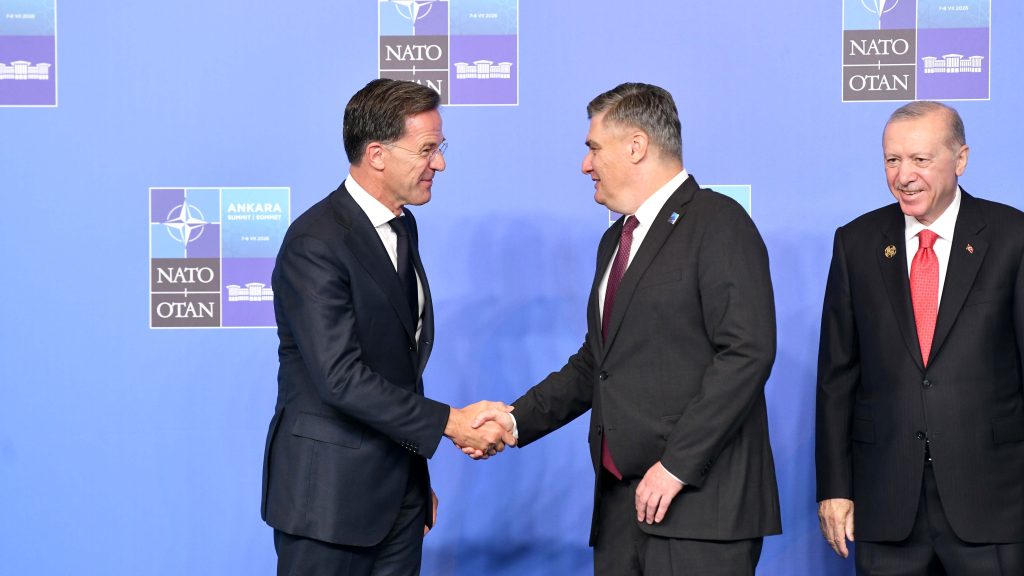
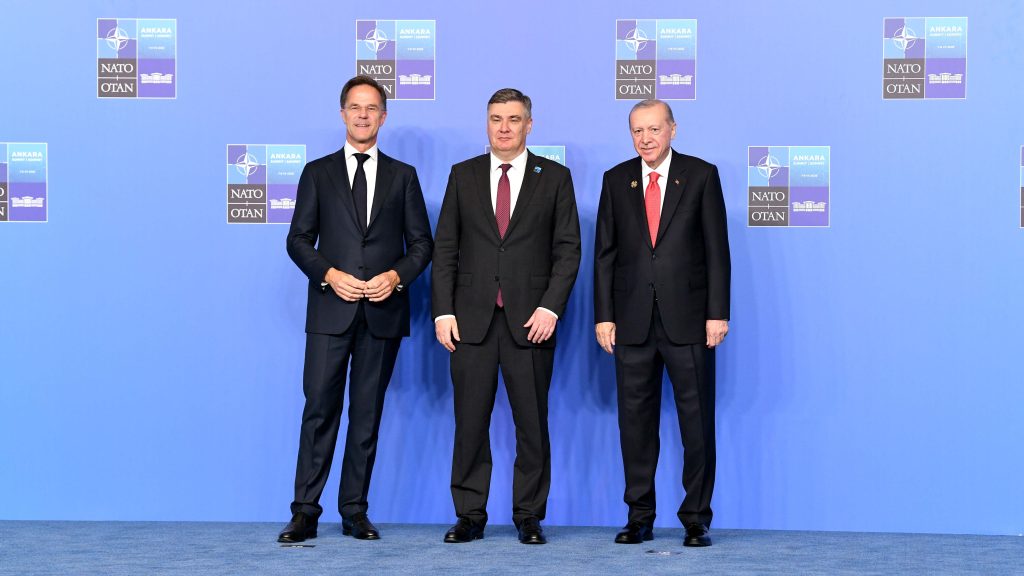
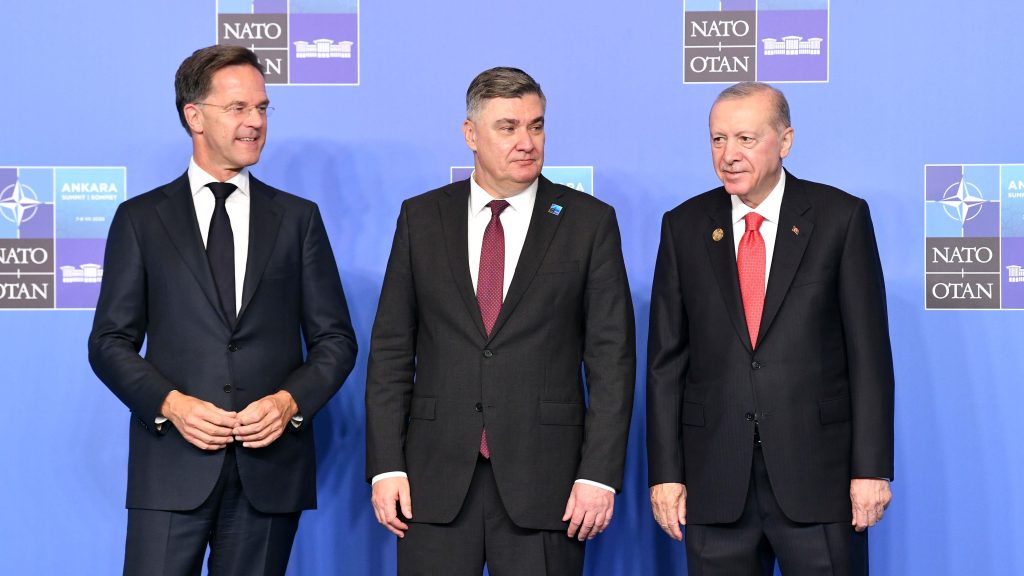
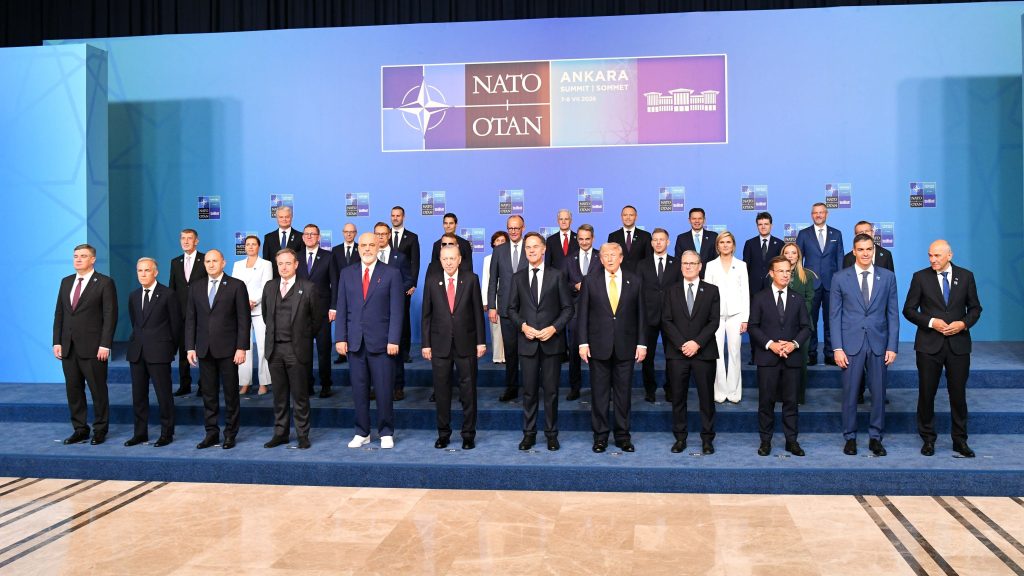
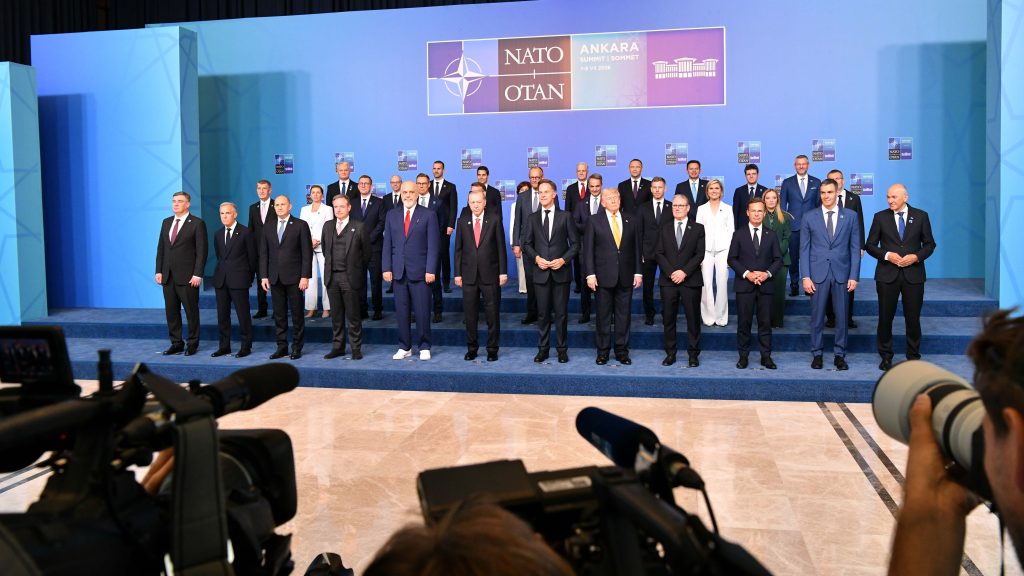
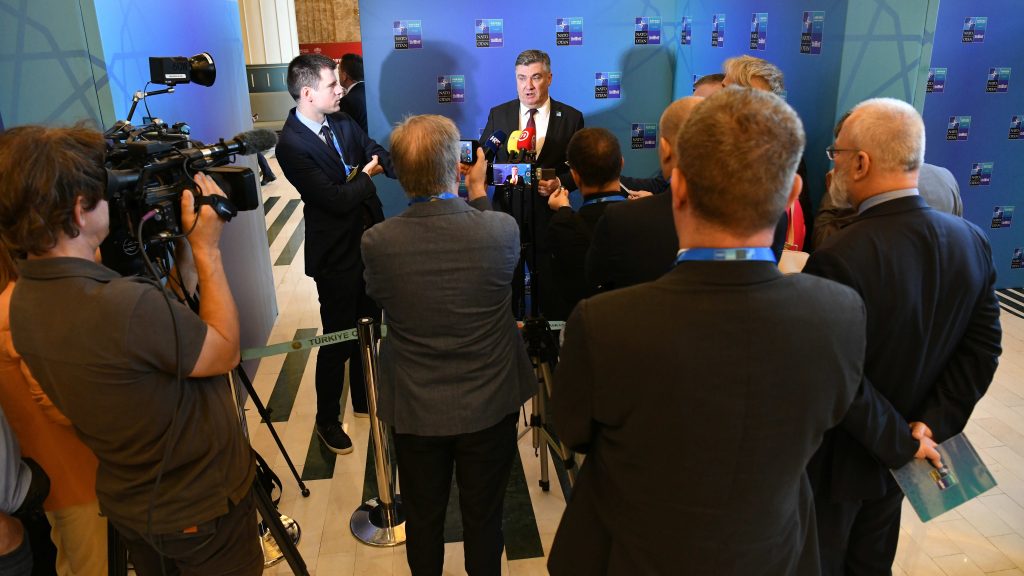
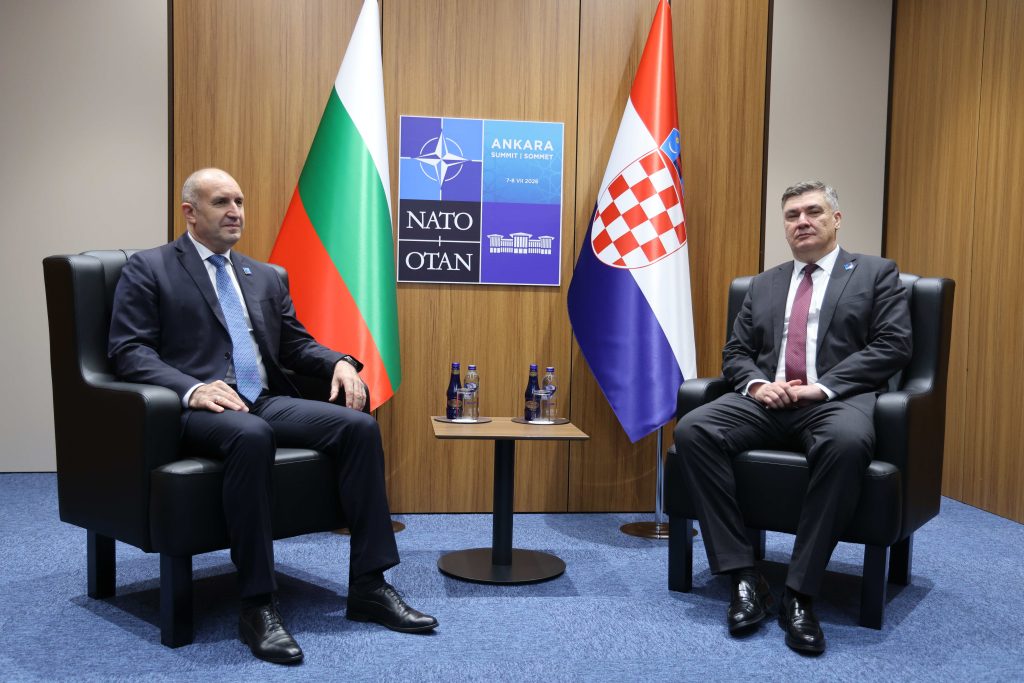
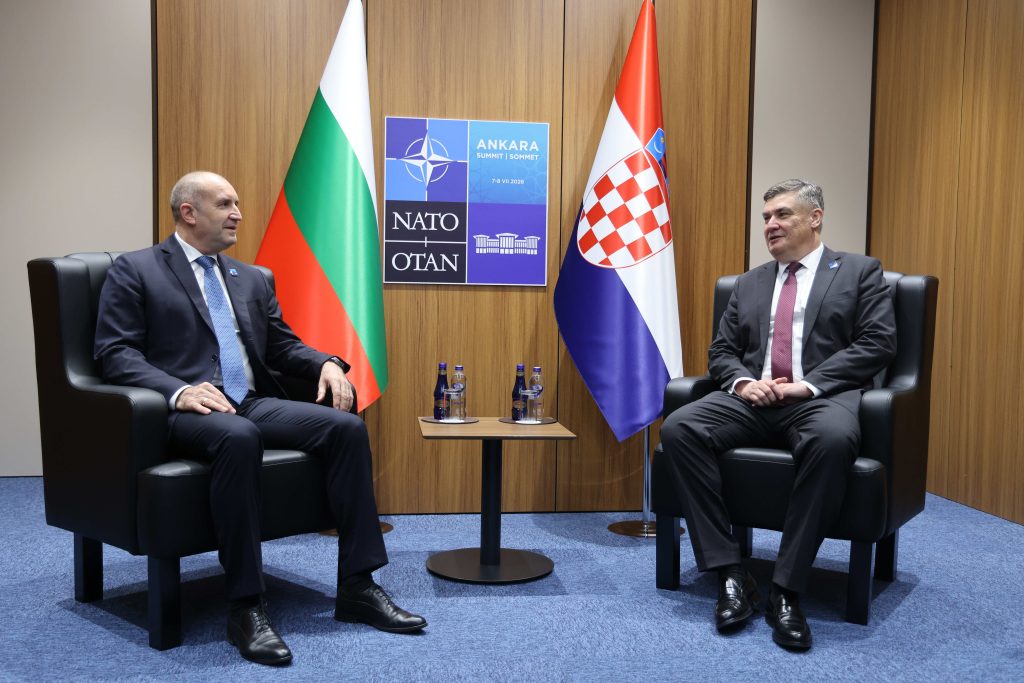
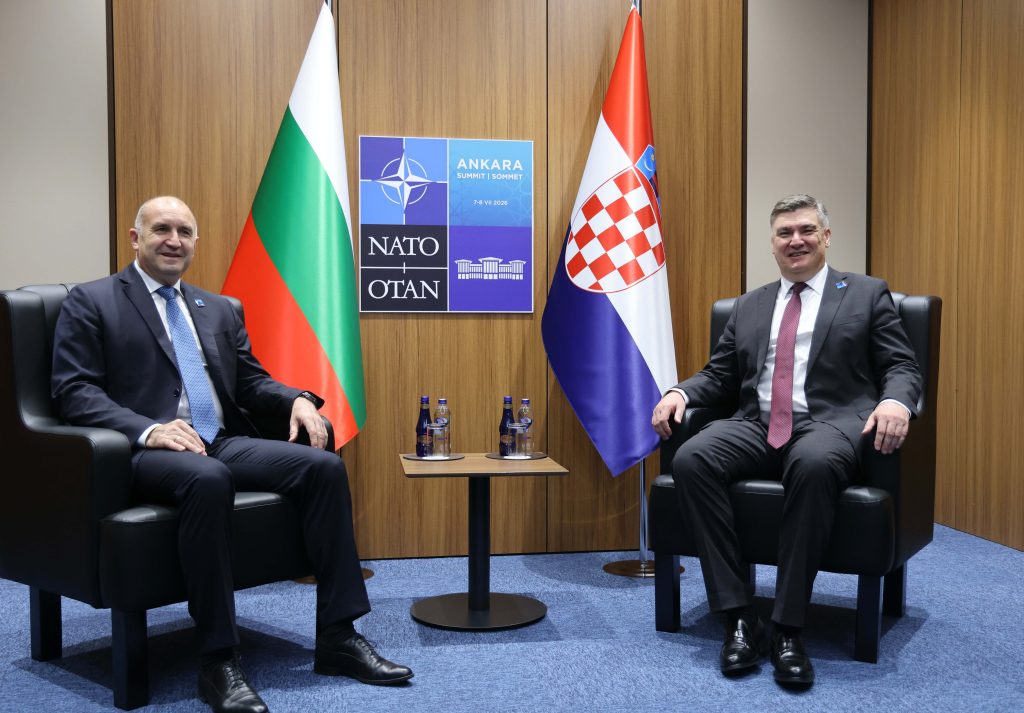
PHOTO: Anadolu Agency, Office of the Prime Minister of the Republic of Bulgaria, NATO, Office of the President of the Republic of Croatia / Tomislav Bušljeta